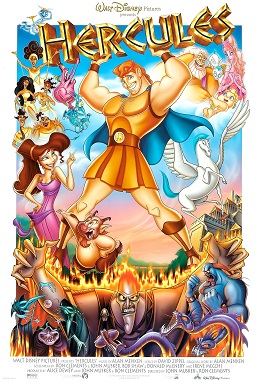
In the vibrant tapestry of Disney's animated classics, few characters strike such a unique chord as the impish duo, Pain and Panic from Hercules. These two demonic imps, often found cowering behind their fiery master, Hades, are a masterclass in comedic villainy. Yet, their on-screen antics belie a fascinating history rooted in ancient Greek mythology, where their names once commanded genuine terror on the battlefield. This article delves into the intriguing evolution of Pain and Panic, tracing their journey from formidable deities of fear to Hades's bumbling, beloved sidekicks, and exploring the impact they've had across various media.
The Divine Origins of Fear: From Ancient Myths to Disney's Underworld
To truly appreciate the brilliance of Disney's Pain and Panic, one must first understand their mythological pedigree. In classical Greek lore, Pain (Algos/Oizys) and Panic (Phobos) are far from the giggling jesters we know. Phobos, meaning "fear" or "panic," and Deimos, meaning "terror" or "dread" (often accompanying Phobos), were traditionally the sons of Ares, the god of war, and Aphrodite, the goddess of love and beauty. They were minor war gods, formidable figures who accompanied their father into battle, serving a crucial psychological role.
Their divine purpose was chillingly effective: to sow discord, terror, and chaos among enemy ranks. Imagine an army facing the might of Ares, with Pain and Panic invisibly working to unnerve them, causing soldiers to break formation, doubt their leaders, and flee in irrational terror. Their presence was meant to make Ares's forces appear horrifying and invincible, ensuring victory through fear long before a single blade was swung. This stark contrast makes Disney's reinterpretation all the more compelling.
Disney's Hercules brilliantly subverts these fearsome origins. While their names still evoke their ancient power, Decoding Pain and Panic: Hades's Shapeshifting Minions are recast as the bumbling, easily terrified minions of Hades, the lord of the Underworld. This narrative pivot transforms the concept of fear and panic from instruments of divine warfare into sources of continuous comedic relief. They are living, breathing paradoxes – named after terror, yet themselves terrified of almost everything, especially Hades's wrath and the raw strength of Hercules.
Hades's Hapless Henchmen: The Enduring Charm of Bumbling Evil
In Hercules, Pain and Panic from Hercules serve primarily as Hades's lackeys, tasked with various schemes to eliminate Hercules or advance their master's nefarious plans. From the moment Hades assigns them the seemingly simple task of turning baby Hercules mortal and disposing of him, their ineptitude becomes a central comedic theme. Their disastrous attempt to poison the infant hero, only for Hercules to effortlessly clobber them, sets the tone for their entire dynamic. They are not merely incompetent; they are endearingly incompetent, their failures often more amusing than frustrating for the viewer.
Their distinct personalities further enhance their comedic appeal. Pain, the shorter, wider imp with pink skin, often appears slightly more grounded (though still terribly foolish) and eager to please Hades, even if it means getting singed. Panic, the taller, thinner blue imp, is a bundle of nerves, prone to hysterics and easily spooked. Their physical appearances cleverly reflect their dispositions: Pain's stockier build suggests a brute force (which he lacks), while Panic's lankiness emphasizes his skittish, easily agitated nature. The interplay between Pain's misguided enthusiasm and Panic's perpetual anxiety creates a delightful comedic duo, a consistent source of laughter amidst the epic mythological backdrop.
Despite their constant blunders, Pain and Panic are oddly indispensable to Hades. They are his eyes and ears, his messengers, and his occasional (if often misguided) muscle. Their very presence highlights Hades's own malevolence by contrast; even the Lord of the Dead needs a pair of dimwitted imps to make his schemes feel complete. They are the villainous comic relief trope executed to perfection, proving that even in the darkest corners of the Underworld, a good laugh is never far away.
Masters of Malleability: The Shapeshifting Shenanigans of Pain and Panic
One of the most notable abilities possessed by Pain and Panic from Hercules is their power of shapeshifting. This skill is a direct link to their mythological roots, where minor deities often possessed such transformative capabilities, akin to the Norse trickster god Loki, as mentioned in the original context. In the film, their shapeshifting is a practical plot device, allowing them to infiltrate, spy, and directly interfere with Hercules's life, albeit usually with disastrous results for themselves.
Their transformations range from the cunning to the ridiculously transparent. They can shift into harmless-looking animals like squirrels or rabbits, only to quickly revert to their true forms to carry out Hades's bidding. More ambitiously, they transform into children to trick a young Hercules, and later into Pegasus to lure him into a trap. These transformations are not just for plot advancement; they are often the source of more visual gags and comedic mishaps. Imagine the internal mechanics: do they feel the change? Is it painful? For Pain and Panic, it seems to be as fluid as it is often ill-conceived.
This power of form alteration speaks volumes about their nature as "chaos gods," as described in some interpretations. While they don't wield cosmic chaos, their ability to change form introduces unpredictable elements into their missions, often spiraling into further complications for Hades. Their shapeshifting ability, while powerful, is ultimately limited by their own intelligence and cowardice, ensuring that even their most promising disguises eventually crumble under pressure or exposure to Hercules's strength. This core power, despite its potential, is consistently undermined by their inherent buffoonery, making them charmingly ineffective agents of villainy.
Beyond Olympus: Pain and Panic's Enduring Legacy in Other Realms
The appeal of Pain and Panic from Hercules extends far beyond their debut film. Their unique blend of menace and mirth has cemented their status as fan favorites, leading to appearances in various Disney spin-offs and video games, most notably the Pain and Panic: Origins, Forms, and Their Role in Kingdom Hearts series.
In the expansive universe of *Kingdom Hearts*, Pain and Panic continue their service to Hades in the Underdrome, the coliseum of the Underworld. Their roles often mirror their film persona: they are still Hades's cowering minions, easily intimidated by powerful figures like Auron (whom Hades describes as "the mother of all bad guys"). Players encounter them as gatekeepers, quest-givers, and even as the namesake for the "Pain and Panic Cup," a combat tournament held in the Underdrome. This integration perfectly captures their essence: they are integral to Hades's domain, yet always on the periphery of true power, remaining the bumbling sidekicks we've grown to love.
Their consistent portrayal across different media underscores their enduring popularity and the effectiveness of their character design. Pain, with his pink skin, maroon hair horns, and close-set yellow eyes, and Panic, with his blue skin, taller frame, and enormous pointed nose, are instantly recognizable. Their physical comedy and distinct vocal performances are a significant part of their charm, making them unforgettable figures in the Disney villain pantheon.
Conclusion
From their mythological roots as fearsome harbingers of battle to their iconic roles as Hades's inept henchmen, Pain and Panic have carved out a unique and memorable place in pop culture. They exemplify Disney's genius in taking ancient figures and infusing them with new life, humor, and a surprising depth of character. The journey of Pain and Panic from Hercules is a testament to the power of transformation, not just in their shapeshifting abilities, but in their narrative evolution. They remind us that even the darkest corners of mythology can yield the brightest, most enduring comedic stars, proving that sometimes, fear is best served with a generous side of laughter.